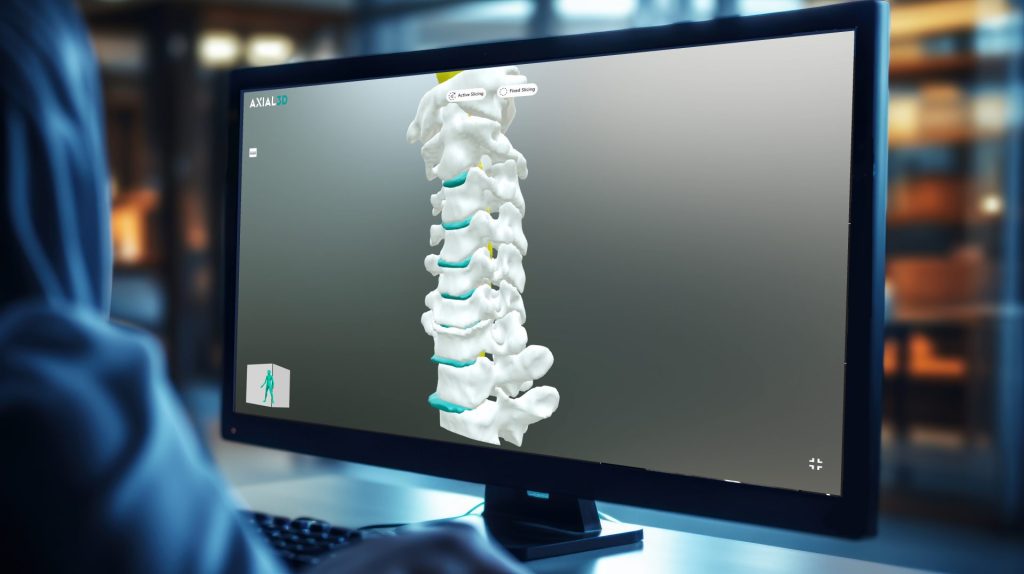
Patient-Specific 3D Models for Better Planning, Education and Patient Understanding
At Axial3D, we understand that precision and accuracy are the foundation of every successful procedure. Research demonstrates that 3D visualizations and 3D printed models offer vital insights, enhancing surgical planning and leading to better patient outcomes.
By delivering highly accurate, patient-specific 3D anatomy, surgeons can better understand complexity, anticipate challenges, and plan with confidence, helping improve precision, reduce variability, and support more efficient procedures.
Transforming Surgical Planning, Education, and Communication
Start Immediatly
With an easy to use online interface, you can upload your data and order your first model in minutes.
Easy to Use
Designed to be intuitive and user-friendly, allowing you to gain access to patient specific models without any special training.
Faster turnaround
A fast and efficient way to convert your medical images into 3D models using automation and AI-powered segmentation.
3D Models to Support Planning Across All Clinical Specialities
Orthopedic & SPine
Support your joint reconstruction portfolio with accurate, standardized 3D anatomical data that enables customized implants,and scalable surgical planning across hip, knee, foot and ankle, and shoulder procedures.
Complex trauma reconstructions
Paediatric congenital deformity
Joint revision surgery
Craniomaxillofacial (CMF)
Support precise interpretation of complex cranio-maxillofacial anatomy, enabling better planning of reconstruction, fracture management, and surgical decision-making.
Facial reconstruction
Mandibular reconstruction
Orbital reconstruction
Cranial defect repair
Cardiovascular
Enable a deeper understanding of cardiovascular anatomy with patient-specific 3D models that translate complex imaging into clear spatial representations that support surgical planning, case review, and heart team collaboration.
Enhance visualization of complex brain, spine, and neurovascular anatomy to support planning and communication across clinical teams.
Neurovascular models
Deep brain lesions
Cranial deformities
General Surgery & Oncology
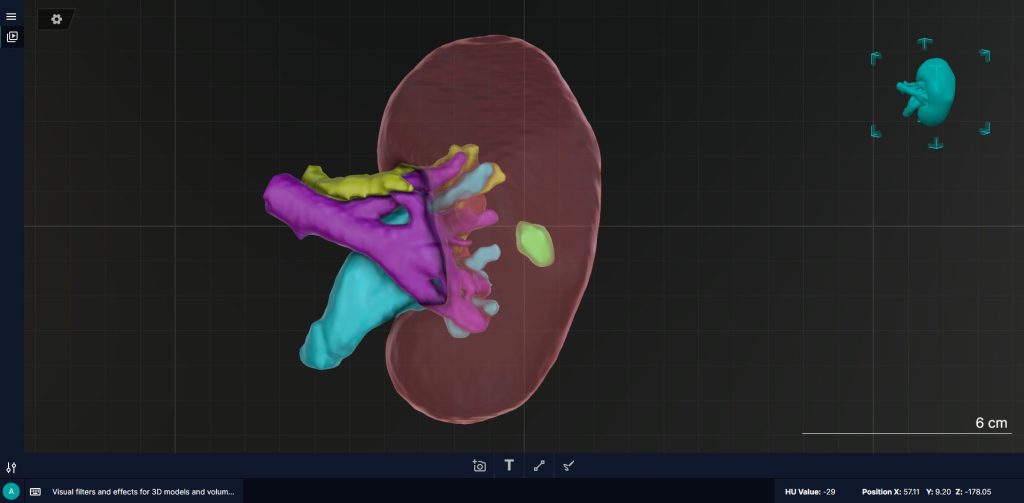
Support more confident surgical planning in oncology and complex general surgery cases with patient-specific 3D models derived from medical imaging, helping clarify tumor relationships and improve case understanding.
Hepatopancreatobiliary (HPB) cases
Complex renal tumors
Prostate oncology
Gastrointestinal oncology
See how easy it is to get Started
Convert medical imaging into patient-specific 3D models in just a few steps.
Research Summary on the Effects of 3D Printed Models
Read a research summary that was carried out by the medical school at University Hospital Southampton and eight HSCNI hospitals who came together to study the effects of 3D printed models in both preoperative planning and also the intraoperative phase. The study was based on 106 models used by 63 surgeons at the 8 hospitals between May 2020 and March 2021, representing cases in orthopaedic (57 models), cardiothoracic (36), maxillofacial (8), neurosurgical (4) and otorhinolaryngology (1) specialties.
We use cookies to ensure that we give you the best experience on our website. If you continue to use this site we will assume that you are happy with it.