
The Future of Orthopedics is Patient-Specific: Strategic Takeaways from AAOS 2026
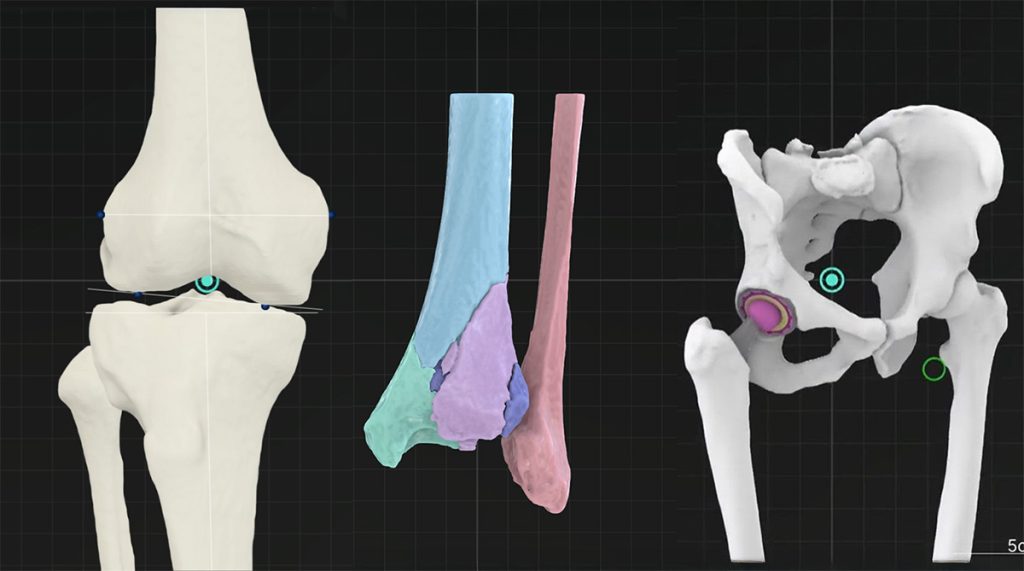
For years, the narrative at AAOS was dominated by the physical devices: the latest implant designs or coatings, the newest fixation methods, and the sheer scale of the hardware on display. But at AAOS 2026, the conversation shifted from the “what” to the “how.” It wasn’t just about the device itself; it was about the […]
End-of-Year Interview: Roger Johnston, CEO of Axial3D

As 2025 comes to a close, Roger Johnson, CEO of Axial3D, reflects on the company’s journey, the challenges and opportunities in healthcare, and the ways 3D technology is transforming patient care. Q: How has Axial3D grown and evolved over the years? Roger: “Our growth over the last 5 years, in particular over the past 12 […]
RSNA 2025: Insights from our CTO, Rory Hanratty

RSNA 2025 showcased the latest advances in medical imaging, AI-driven workflows, and patient-specific care. We spoke with our CTO, Rory Hanratty, to get his take on the key trends, innovations, and insights from the conference—and what they mean for the future of personalized healthcare.
10 Years of Axial3D: From a Big Idea to a Global Mission

By Daniel Crawford, Founder & Chief Strategy Officer, Axial3D Ten years. It’s remarkable to think about everything that’s happened. When we started Axial3D back in 2015, the idea was simple but ambitious: make it easier for surgeons to actually see what they were about to operate on. Not just flat 2D slices, or relying on […]
Why Axial3D Created AXCEL for Medical Device Companies. Q&A with Dan Crawford.
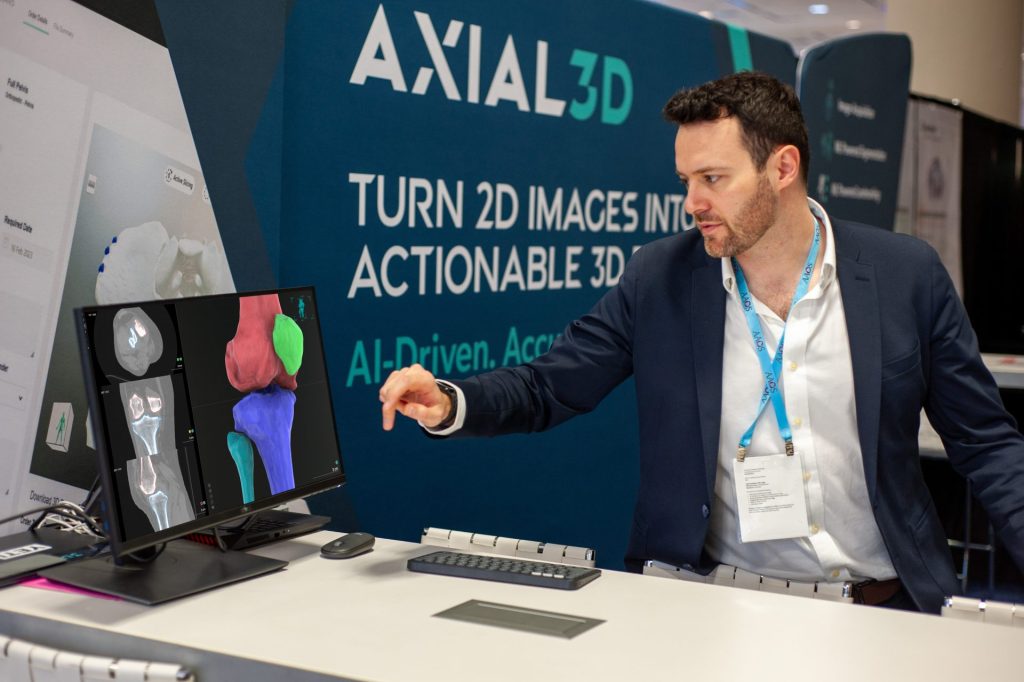
In an industry racing toward personalized care, medical device companies are often held back by legacy systems, resource constraints, and manual workflows that slow time-to-patient. That’s exactly why Axial3D created AXCEL, a configurable, AI-powered, cloud-based software platform designed specifically for the unique needs of device manufacturers. We sat down with Dan Crawford, Founder of Axial3D, […]
How Axial3D Leverages AWS Cloud to Scale Personalized Surgery

In the era of personalized medicine, healthcare innovation depends on agility, automation, and the ability to scale globally. Axial3D is enabling medical device companies, hospitals, and clinicians to deliver patient-specific care faster and more efficiently, powered by the cloud and, more specifically, by Amazon Web Services (AWS). What is the cloud? At its core, the […]
AI vs. Human Interaction? Why Healthcare Needs Both

Across industries, conversations about AI and automation often fall into a familiar narrative: humans versus machines. But in reality, it’s not a competition—it’s a collaboration. Nowhere is this more important than in healthcare, where every decision carries profound, life-changing weight. The healthcare sector is at a pivotal moment. AI is advancing at an unprecedented pace, […]
Orthopedic Innovation in Focus: A Recap on Scaling Patient-Specific Implants with AI and Automation

Scaling Patient-Specific Implants: Why Now Is the Time to Break the Workflow For years, personalized medicine has been the goal in healthcare—delivering care tailored to each individual patient. But in orthopedics, one of the most impactful areas for personalization, true patient-specific solutions are still the exception, not the rule. So what’s the holdup? Daniel Crawford, […]
Navigating the Digital Transformation of Healthcare: A Roadmap for Medical Device Innovation

Healthcare is evolving at an unprecedented pace. Advances in AI, 3D imaging, and automation are not just changing the tools clinicians use; they are reshaping how care is delivered. For medical device companies, this transformation presents both a challenge and an opportunity: how to integrate these technologies in ways that deliver measurable value to hospitals, […]
Why the Convergence of AI, Machine Learning, and 3D Imaging are the Perfect Storm for Medtech Innovation

At every level of the healthcare ecosystem, the convergence of 3D imaging with artificial intelligence and machine learning is seismically shifting the way that healthcare operates. Compared to standard 2D imaging, 3D imaging provides clinicians, case planners, and engineers with a far more detailed and comprehensive understanding of patient anatomy—ultimately supporting better decision-making by allowing […]

