
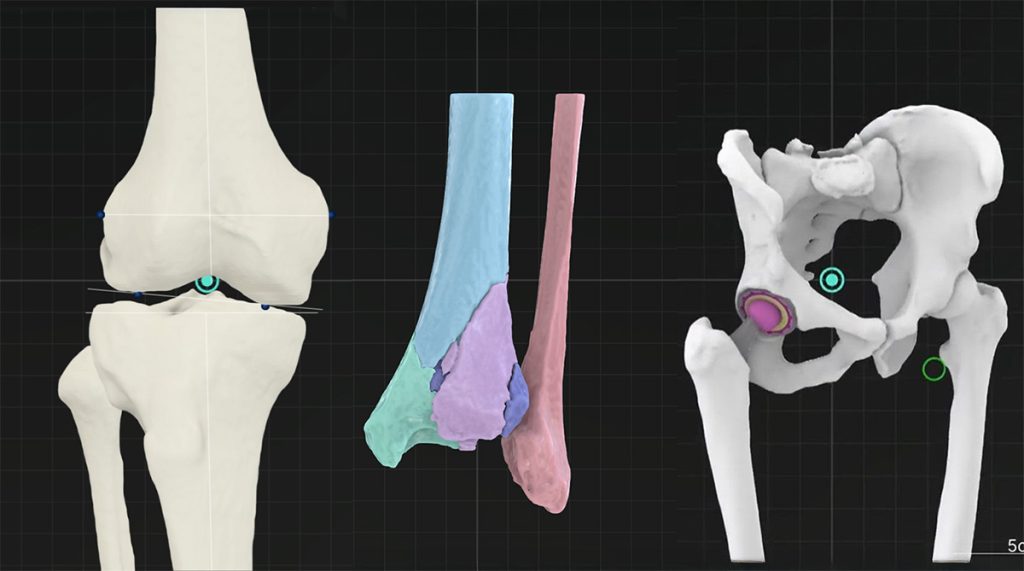
For years, the narrative at AAOS was dominated by the physical devices: the latest implant designs or coatings, the newest fixation methods, and the sheer scale of the hardware on display. But at AAOS 2026, the conversation shifted from the “what” to the “how.” It wasn’t just about the device itself; it was about the digital foundation required to provide personalized care for each patient.
The industry has entered an era where an implant is only as effective as the data and planning behind it. At the Axial3D booth, discussions highlighted how high-fidelity 3D data is becoming the intelligence layer of modern orthopedic patient-specific workflows. By transforming standard imaging into accurate, actionable 3D models, this data removes the historical “guesswork” from complex arthroplasty. It also unlocks downstream applications that power surgical planning, templating, robotics, and other patient-specific device workflows.

“We’ve reached an inflection point,” said Dan Crawford, Axial3D founder and CSO. “The industry is realizing that the next leap in patient outcomes won’t come from a new shape of metal, but from the software that allows us to scale surgical expertise and standardize precision for every patient.”
The “Build vs. Partner” Reality Check
One of the clearest trends at AAOS 2026 was how medtech companies are evolving their digital strategies. Many OEMs have long invested in developing in-house planning tools, reflecting their dedication to innovation. Today, companies are increasingly recognizing that the expertise required to develop a world-class, AI-driven patient specific planning platform is a distinct discipline from manufacturing implants.
Rather than viewing this as a replacement, leaders are embracing specialized partnerships to complement their strengths. By integrating proven software foundations into their workflows, companies can accelerate innovation, scale their solutions faster, and focus their resources where they make the biggest impact on delivering exceptional implants and patient outcomes. As one executive noted, “We want to be the best at what goes into the patient; we need partners who are the best at what goes into the plan.”
Expanding Beyond Elective: The Opportunity in Trauma
AAOS 2026 made one thing clear: orthopedics is becoming increasingly digital. The exhibit floor was filled with computer screens, robotics, and software, all largely centered around joint procedures, where there is time to plan, template, and optimize before surgery.
But this also highlighted a significant opportunity. In trauma, where cases are urgent and time is limited, digital workflows have yet to be fully realized. These procedures don’t allow for lengthy, manual planning processes or heavy reliance on specialized personnel. Instead, they demand solutions that are fast, automated, and accessible in real time.
This is where the next wave of innovation will emerge. By enabling automated, cloud-based patient-specific workflows, trauma care can benefit from the same level of precision and insight seen in elective procedures without adding complexity or delay. It’s not about replicating joint workflows, but about rethinking them to meet the realities of trauma: delivering the right information, at the right time, wherever it’s needed.
Precision for Complex Revisions
A growing concern in orthopedics is the increasing number of complex revision cases. Implants placed during the early 2000s are now reaching their expected lifespan, often involving significant bone loss and existing hardware that standard “off-the-shelf” solutions can’t address.
The consensus at AAOS 2026 was clear: Patient-specific surgical planning solutions are no longer a luxury for complex revisions; they are becoming the baseline for confident OR preparation. Starting with a detailed digital 3D analysis of bone quality and hardware position, these solutions enable patient-specific planning, optimized device selection, and streamlined intraoperative execution. Surgeons can navigate even the most challenging cases with confidence, reducing surprises, shortening OR time, and improving patient outcomes.
The Axial3D Advantage: Scaling Precision for MedTech
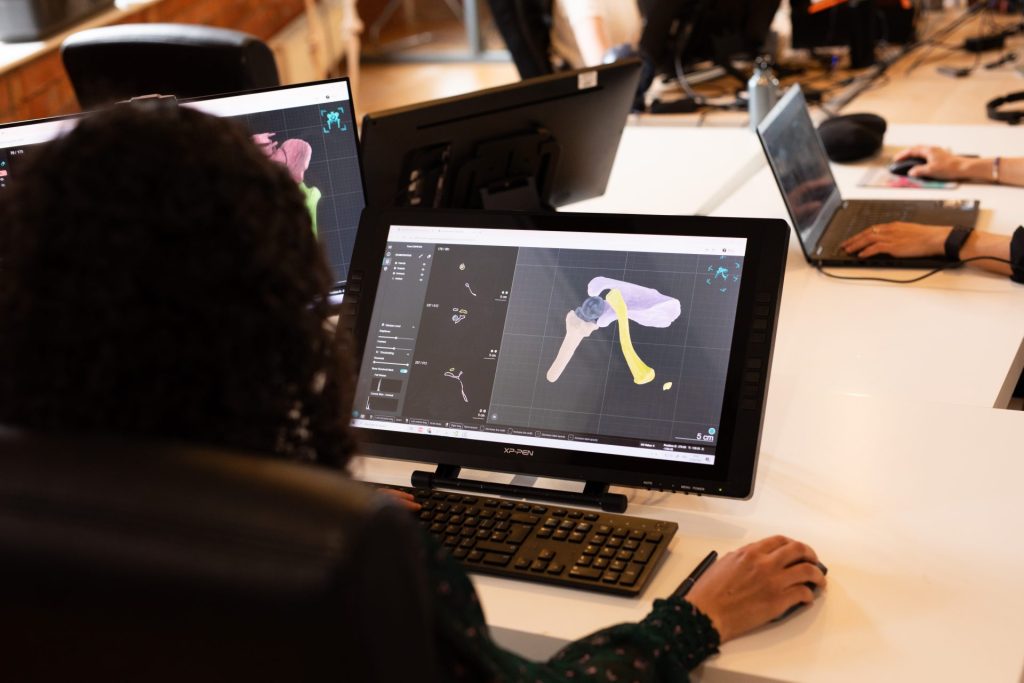
At Axial3D, we don’t just provide 3D insights; we provide the infrastructure for the next generation of orthopedics. We understand that for a medical device company, the goal is to get high-performing hardware into the hands of surgeons with as little friction as possible. By serving as the intelligence layer behind the instrument, we help OEMs move from “selling a device” to “providing a total clinical solution.”
Our platform allows MedTech companies to:
- Accelerate Market Entry: Skip the years of R&D and regulatory hurdles required to build an in-house planning suite. Axial3D provides a “ready-to-go” configurable digital ecosystem designed to meet the unique requirements of medical device companies, making your hardware planning-ready on day one.
- Reduce Operational Overhead: High-fidelity, AI-driven planning means fewer “just in case” instrument trays, less intraoperative guesswork for your field reps, and a leaner, more profitable support model in the ASC.
- Drive Surgeon Loyalty: By equipping surgeons with patient-specific surgical planning and 3D guidance for every case, from complex revisions to routine joint replacements, you’re not just selling implants, you’re giving the confidence and predictability that builds loyalty.
Conclusion: The Future of Orthopedics is Patient Specific
AAOS 2026 confirmed that the industry has outgrown the hardware-only mindset. The most successful medical device companies of the next decade will be those that prioritize digital tools that empower patient-specific planning and surgical predictability.
At Axial3D, we take the complexity out of the planning process so you can focus on what you do best: innovating the physical tools and devices that change patient lives. We aren’t just a software provider; we are the engine that helps you deliver precision at scale and predict the unpredictable in every OR.
